Antarctica – NMA
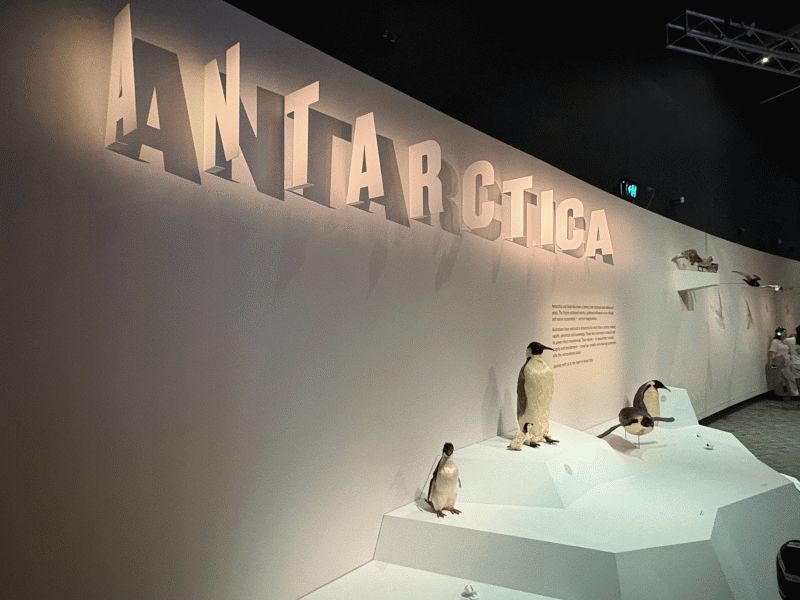
The National Museum of Australia’s exhibition Antarctica, ran from 1 July to 11 October 2026, telling extraordinary first-hand stories of more than 100 years of Australians in Antarctica – from early explorers to recent expeditioners at Australia’s Antarctic and sub-Antarctic research stations. Antarctica featured rare objects from one of the world’s largest Antarctic collections, on public display for the first time since their acquisition from the Australian Antarctic Division.
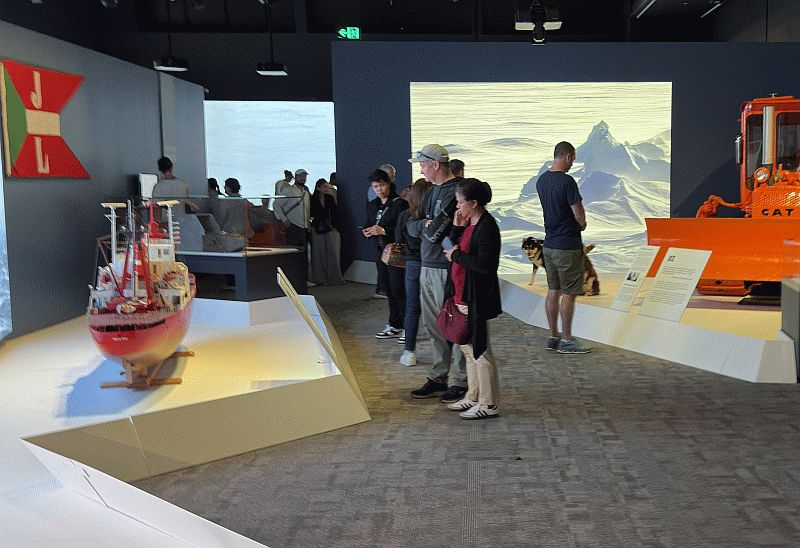 The exhibition featured rare objects from one of the world’s largest Antarctic collections, on public display for the first time since their acquisition from the Australian Antarctic Division. It brought a new understanding of how Antarctica continues to capture the imaginations of Australians – and why caring for it matters to us all.
Many of the objects had never been on display before. The skis used by Australian explorer Cecil Madigan in 1912 were among the items on the National Museum of Australia’s Antarctica exhibition.
They included a range of oversnow vehicles, including the unique 1975 Mole Mink, which was manufactured in Sydney using Holden engines but constructed by technicians in Antarctica.
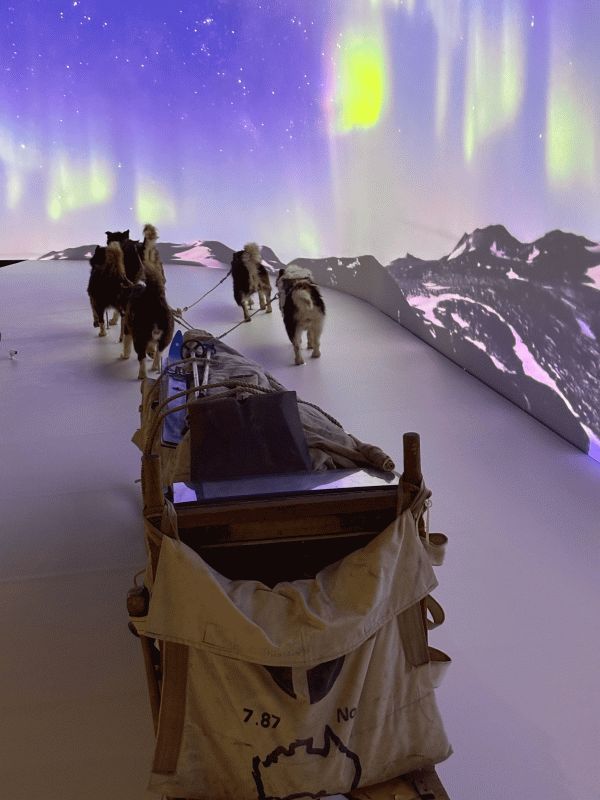
Huskies
There was a 1955 barge caravan used as temporary accommodation during the construction of Mawson station, and a mammoth 8.5 tonne tractor described as the “workhorse” of the Australian Antarctic Program, and one of the heaviest objects the museum has housed.
A sled and skis used by Australian explorer Cecil Madigan in 1912 were also on show. So too was a baggy yellow jacket worn by Diana Patterson, the first woman to lead an Australian Antarctic station.
A highlight of the exhibition was a team of huskies in their harnesses attached to a centre trace towing a fully loaded sled, behind them a room-length scenic continuous movie of Antarctic scenery.
Visitors could also see ration packs and a bottle of beer brewed in Antarctica in 1969, an activity that was a popular pastime for decades.
Some of the objects were more personal, including diaries and letters from explorers.
“When I think of all the fellows slaving in offices in cities when there is all this beautiful God’s world to explore and all its wonders to see, I pity them,” 21-year-old surveyor George Dover wrote in 1912.